

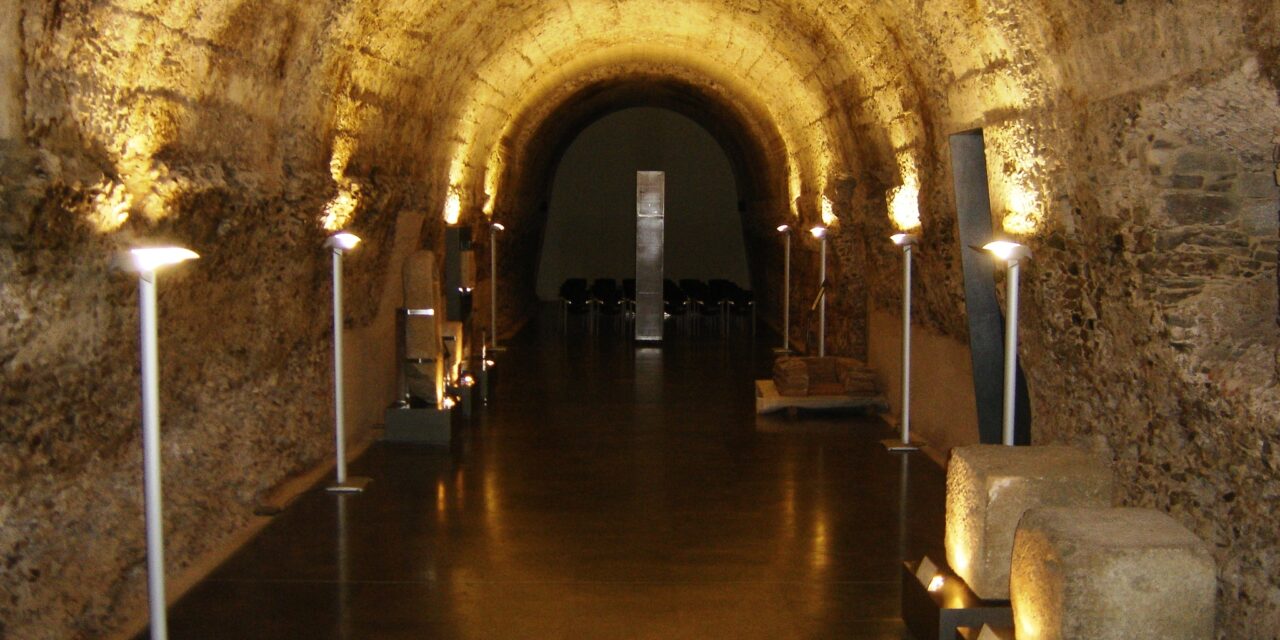
The Roman Museum of the city of Astorga is located in the so-called Ergastula, a vaulted structure situated in the central area of the 1st-century forum. In 2000, the current Roman Museum building was constructed above this famous structure, organized into two floors—one for the permanent exhibition and the other for scientific work.
The Ergastula is a vaulted gallery about fifty meters long. It was part of a building located in the center of the forum of Asturica and was built using opus caementicium, the so-called Roman concrete made from a mixture of lime, sand, and water. Its likely purpose was to support, along with two now-lost sections, the Ara Augusta—an altar for the imperial cult—built on these vaulted galleries to raise it above the rest of the forum. The Ergastula was declared a National Monument in 1951.
In addition to admiring this unique vaulted passage, visitors can explore an interesting epigraphic collection with tombstones and funerary inscriptions from various excavations. These provide valuable information about the inhabitants of Asturica Augusta, such as their names, professions, ages, and who dedicated the monument. At the end of the Ergastula, visitors can also watch an emotional short film about the slave Lyda, whose tombstone is also preserved in this part of the museum.
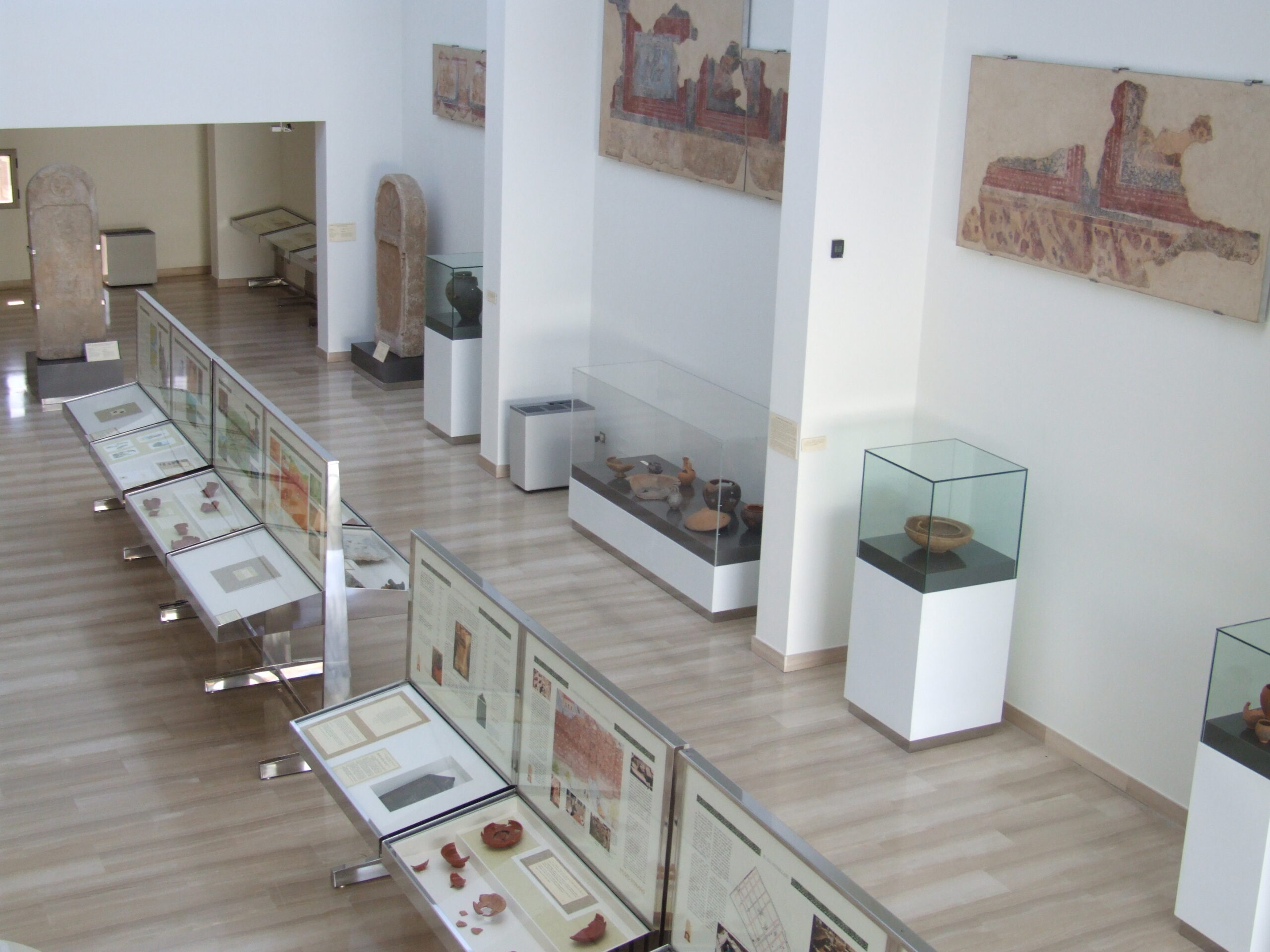
On the third floor is the museum’s permanent collection, which displays objects found in excavations of ancient Asturica Augusta. All items are related to both the public and private lives of the city’s Roman inhabitants.
Among the varied items on display are the aureus of Emperor Tiberius and the treasure of denarii coins, a silver-gilt plaque dedicated to the god Marti Tileno, a replica of an Astur torc (the original held in the National Archaeological Museum), Pompeian paintings discovered in the mid-20th century by José María Luengo, personal hygiene and grooming items, men’s and women’s jewelry, ceramics, glassware, and various construction materials from Roman urban buildings.
From the Roman Museum, visitors can also embark on the Roman Route—a guided tour of archaeological remains in Astorga’s historic center. The itinerary includes a section of the moat from the Legio X Gemina military camp, which gave rise to the city. It also includes the Minor Baths, the Curia (a space in the forum used for city governance), remains of the forum portico, part of the Roman sewer system, and the Domus of the Mosaic of the Bear and the Birds, one of the finest examples of Roman housing in Asturica Augusta.
Curiosities
The Ergastula was acquired by the City Council of Astorga in several phases. Previously, it had been privately owned and used for various purposes. It is an extremely solid construction, designed to support heavy loads and occupy a place of honor in the forum. The Romans used specific building techniques to reinforce and strengthen this part of the structure. Thanks to this durability, this section of the Ergastula survived multiple demolition attempts throughout history.
Its name stems from a long-held but mistaken belief that it had been used as a slave prison during Roman times. The Latin word “ergastula” means “place of the slaves.” However, it is historically confirmed that the building was used as a prison during the medieval period, due to its robustness and lack of windows or openings to the outside.