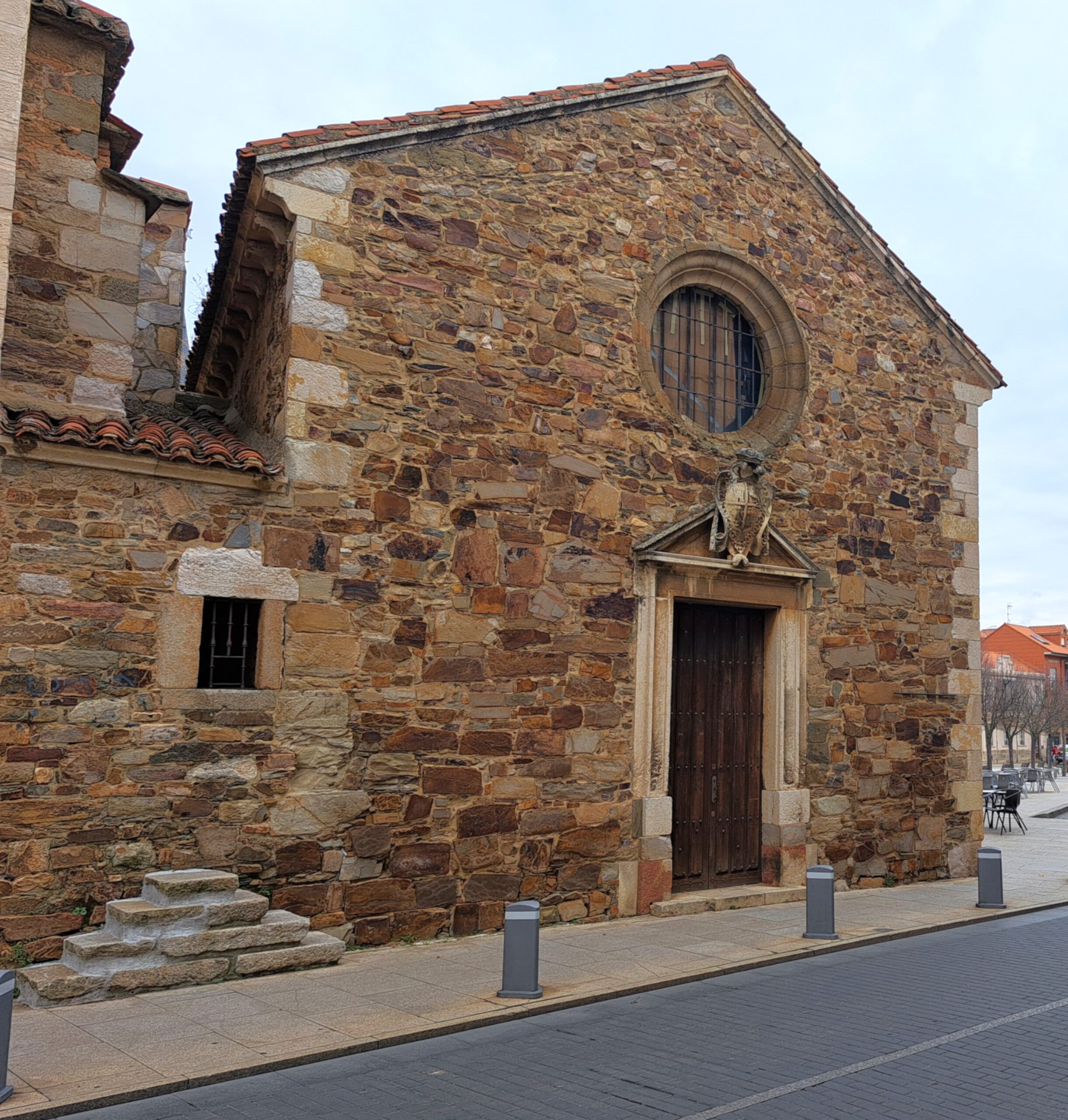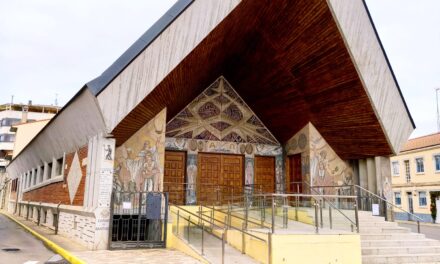


One of the oldest charitable brotherhoods in Astorga is that of the protomartyr Saint Stephen. Founded as a clerical brotherhood in the nearby village of Brimeda in the 10th century, it eventually moved to the city. In 1304, Bishop Alfonso of Astorga and the Cathedral Chapter granted land next to the parish church of Saint Marta for the construction of a chapel—this same chapel still stands today.
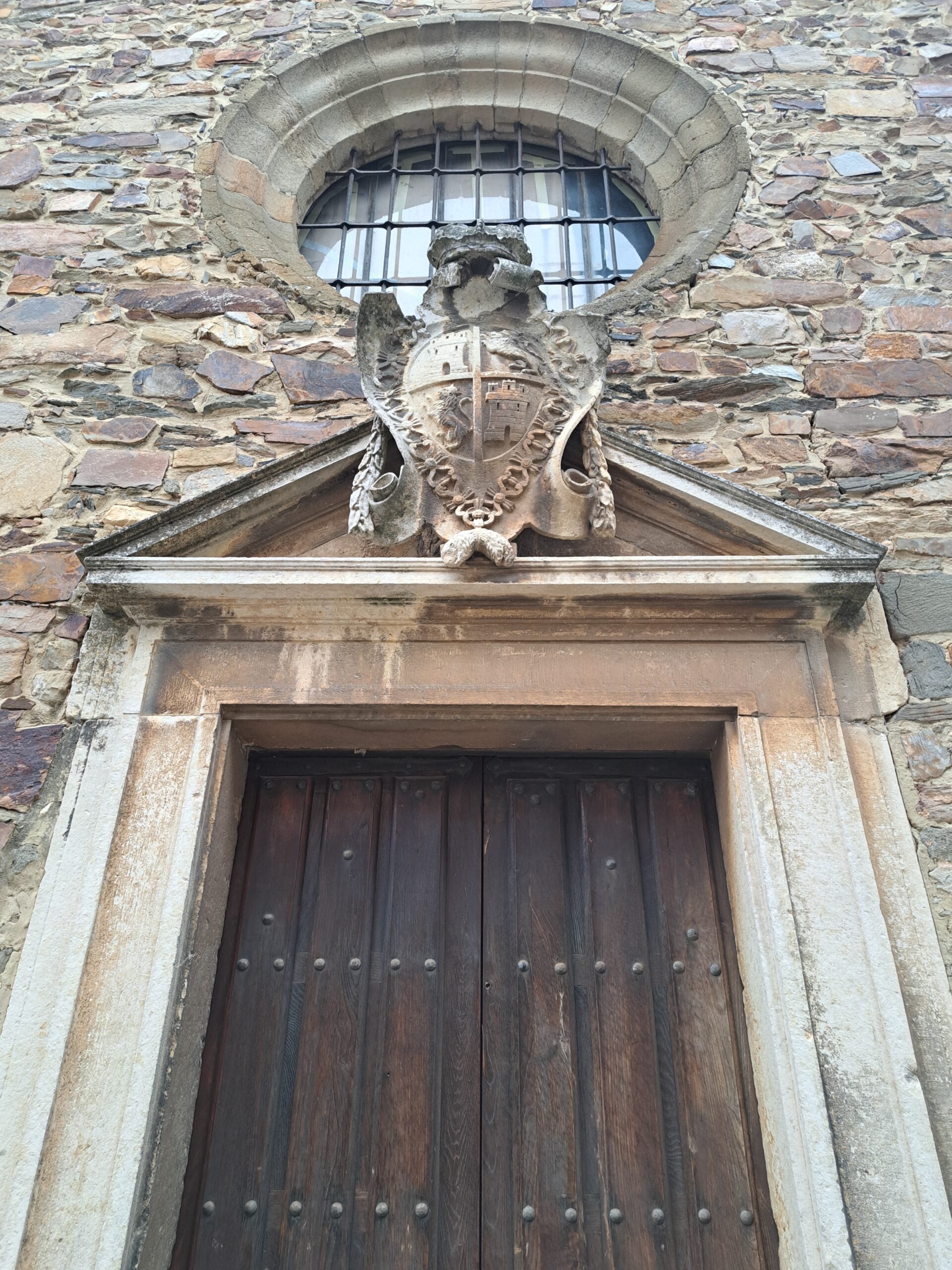
The building has a rectangular layout and an exceptionally simple architectural style, built in masonry with ornamentation only on the corbels. Inside, bare walls provide access to the Enclosed-cell of the “Emparedadas” and to ancient burial niches, all displaying austere sobriety. The portal was remodeled in Neoclassical style in 1787 by architect Manuel Serrano, featuring the coat of arms of King Charles III arranged in a bold composition.
Over time, the Brotherhood of Saint Stephen became associated with the city’s minor nobility. It accumulated large economic endowments, generating substantial income, and was composed exclusively of its twelve brothers.
The brotherhood maintained its independent existence until 1817, when a Royal Decree dissolved it and merged it into an institution that had already been attempting, since the 16th century, to unite the city’s many brotherhoods—now reduced to five through consolidation.
These merged brotherhoods, which administered small hospitals, approved new statutes in 1690 under the name Real Brotherhood of the Five Wounds. Their hospitals were eventually centralized into a single facility near Puerta Sol, adjacent to the Franciscan convent, which began operating in 1773, also governed by twelve brothers.
Wars and 19th‑century secularization laws placed the Real Brotherhood under severe strain. Having already absorbed the Brotherhood of Saint Stephen, it suffered losses of property and income. Only the chapel and hospital remained, along with a few important artistic artworks.
Despite these hardships, the Brotherhood’s charitable mission endured. A new regulation came into effect in 1917, and the hospital continued serving until an unfortunate fire in 1981 destroyed its facilities. In 1995, the Brotherhood transferred the rights to the land to the Diocese of Astorga, enabling construction of the Cinco Llagas Social Center to serve people with physical disabilities—adapting its founding purpose to contemporary needs.
The Real Brotherhood of the Five Wounds—governed by its twelve brothers—today remains a living testament to Astorga’s history of charitable and social solidarity from the Middle Ages to the present day.
ASTORGA AND THE EMPAREDADAS: BACKGROUND ON THEIR CELL
The practice of enclosure—emparedamiento—took two forms: as punishment or voluntarily. Though the former has ancient roots, voluntary, penitential enclosure—derived from hermit and monastic traditions—became notably widespread in the medieval era, particularly among urban laity from the 12th to 16th centuries.
Monastic-style enclosures—sometimes solitary, sometimes communal—have been studied under categories like ‘holy recluse’ and ‘monastic prisoner.’ Models vary from Saint Valerius to Saint Oria.
Late-medieval voluntary enclosures—more laity and female—were addressed historically and literarily (by Victor Hugo, Emilia Pardo Bazán). Since the Counter-Reformation, Spanish historiography on these phenomena has grown (Joseph de Cardona, Manuel Antonio de Orellana). Since the late 20th century, research has focused on vita apostolica and spiritual life outside monastic walls (holy women, beguines, beatas, and similar movements).
A significant discovery was the Barcarrota Library’s copy of the Oración de la Emparedada, edited and studied by J. Carrasco and García de Enterría. This prayer text narrates episodes from Christ’s Passion and His appearance to an emparedada, conferring spiritual benefits and indulgences.
In prosperous 12th-century European regions (Italy, the Netherlands), urban religious expressions emerged—vita apostolica, hermitism, lay brotherhoods—in secular life. Among them, emparedamiento stood out as the most radical form of fuga mundi, rooted in evangelical poverty and detachment from worldly concerns. Laity played leading roles in these new expressions of Christian practice.
Medieval people (12th–15th centuries) sought closeness to Christ in his poverty, viewing life as pilgrimage toward heaven. Poor living was a model to secure salvation and spiritual benefits through mercy. This vita apostolica owed much to urban settings and mendicant reforms. Voluntary enclosure spread across Western Europe’s cities more than rural areas, and among women more than men. It was a solitary, heroic and ascetic practice—evocative of desert hermits and early Church cenobites—like early Lenten enclosures. This practice revived in the late medieval and early modern periods.
A review of medieval Iberian documentation confirms the spread of enclosure practices across kingdoms, towns, villages, rural sites—even near churches, hospitals, cemeteries, or city walls.
Specifically in Astorga, documents record multiple emparedamientos in both the walled city and outskirts. A 1361 will by Juan Martínez, a local merchant, states:
“I order that, in addition to my other assets, there be forty maravedíes annually for the emparedadas of the city of Astorga and its suburbs—for the feast of the Expectation of Our Lady and for the feast of Candlemas.”
The emparedadas maintained social ties with their community as instruments of spiritual benefit and public intercession. Their isolation was through the cell, not the society—they participated in brotherhoods and paid dues; living in enclosure did not equate to complete social separation.
The Cell
Astorga still preserves one of the reclusion cells located between the church of Santa Marta and the chapel of the Brotherhood of Saint Stephen. Its position was ideal—on the city’s busiest street, on the Camino de Santiago, close to the cathedral, adjacent to the parish church of its patron martyr, Santa Marta. The chapel belongs to Astorga’s former most powerful brotherhood of clerics, whose patron was Saint Stephen the Protomartyr.
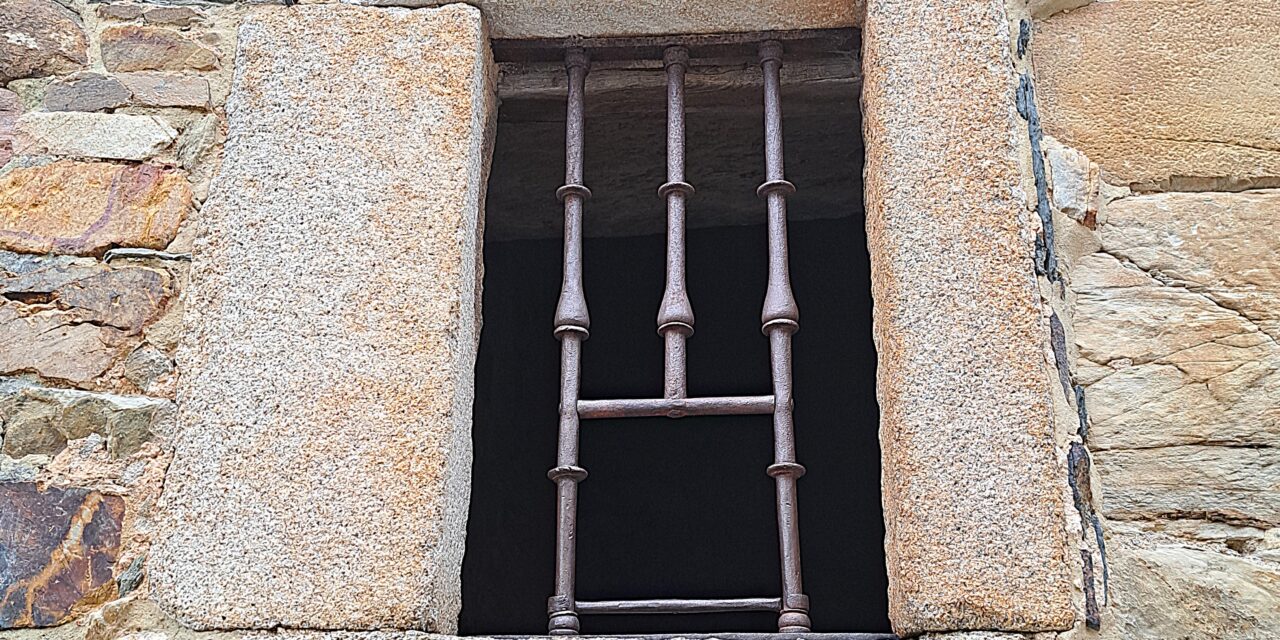
The cell is small and irregularly shaped: the street-facing wall between the church façade and the chapel façade is just 1 meter long, housing the barred window. Internally, the space widens to 1.30 meters and extends 3.80 meters deep. A single doorway in the chapel wall provides access; the opposite wall once held another window (now blocked) allowing the recluse to view the altar during Mass.
Above the street-facing window, an inscription remains carved in the lintel:
“Memor esto juditii mei, sic enim erit et tuum. Mihi heri et tibi hodie”
(Remember my judgment because yours will be the same. Mine yesterday, yours today — Sirach 38:22).
The window’s three bars (the central one intentionally interrupted) allowed food and material contact, showing that the recluse still interacted with society—yet remained physically hidden due to height. The church-facing window provided spiritual nourishment. Known as “the enclosed woman of Santa Marta,” she received spiritual sustenance from the church.
The only entry to the cell was through a door in Saint Stephen’s chapel, which was sealed when a new recluse entered and reopened only after her death.
The dating of the cell is problematic: while the entrance door could be medieval (12th century), the inscription dates to the 15th–16th centuries. Documentation confirms the cell was occupied in the late medieval and 16th centuries, possibly until the Council of Trent.
Bibliography:
-
CAVERO, “El emparedamiento en Astorga,” Yermo, no. 16 (1978), pp. 21–44.
-
CAVERO, Inclusa intra parietes. La reclusión voluntaria en la España Medieval, Editions Méridiennes, Toulouse (2008).