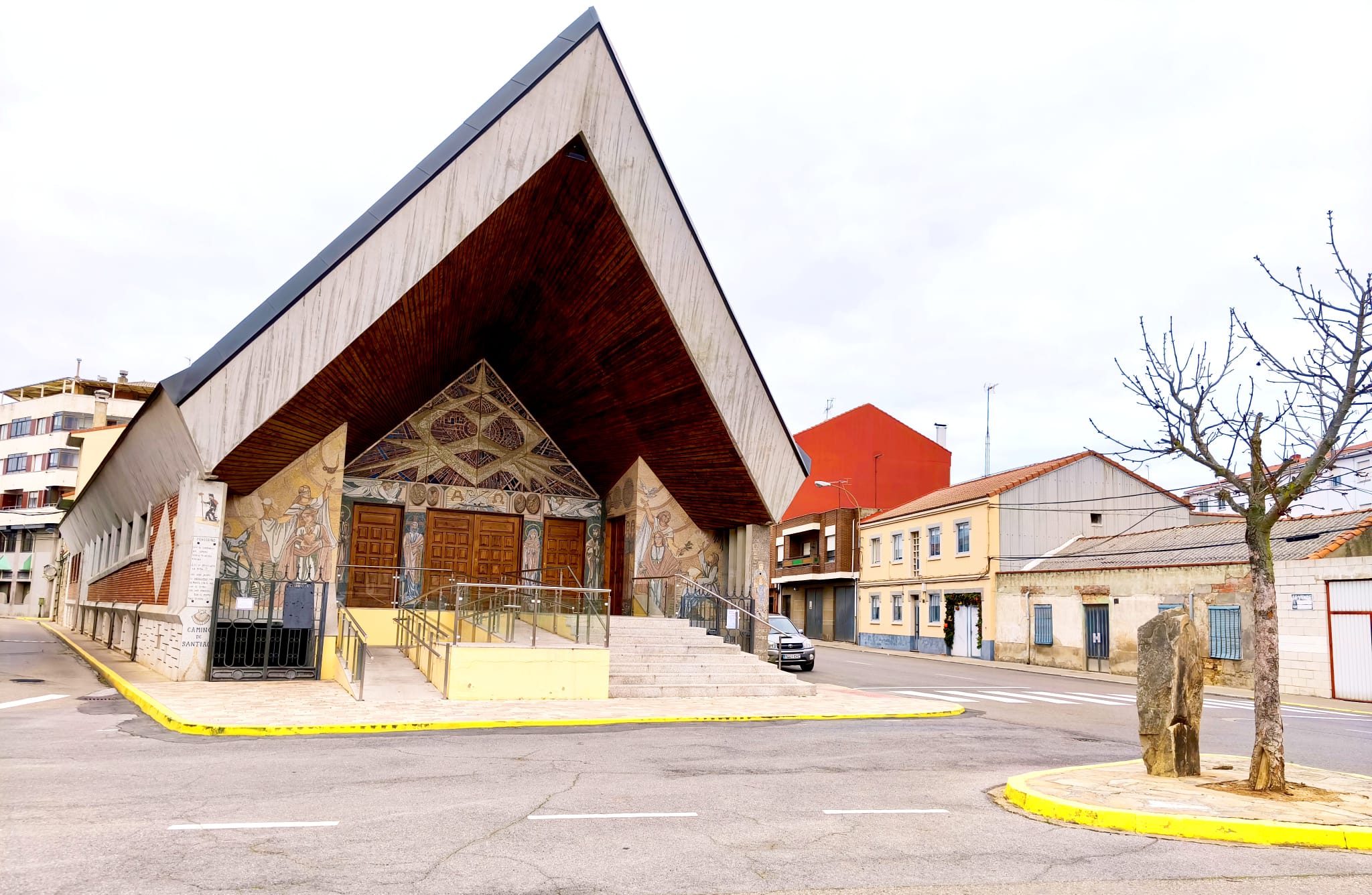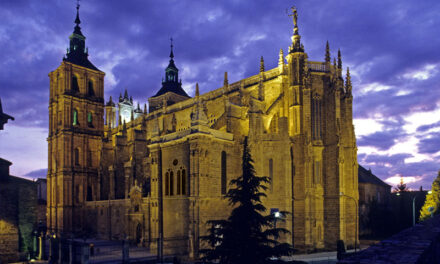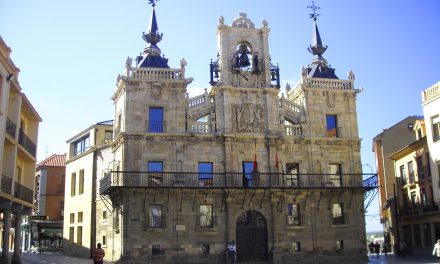


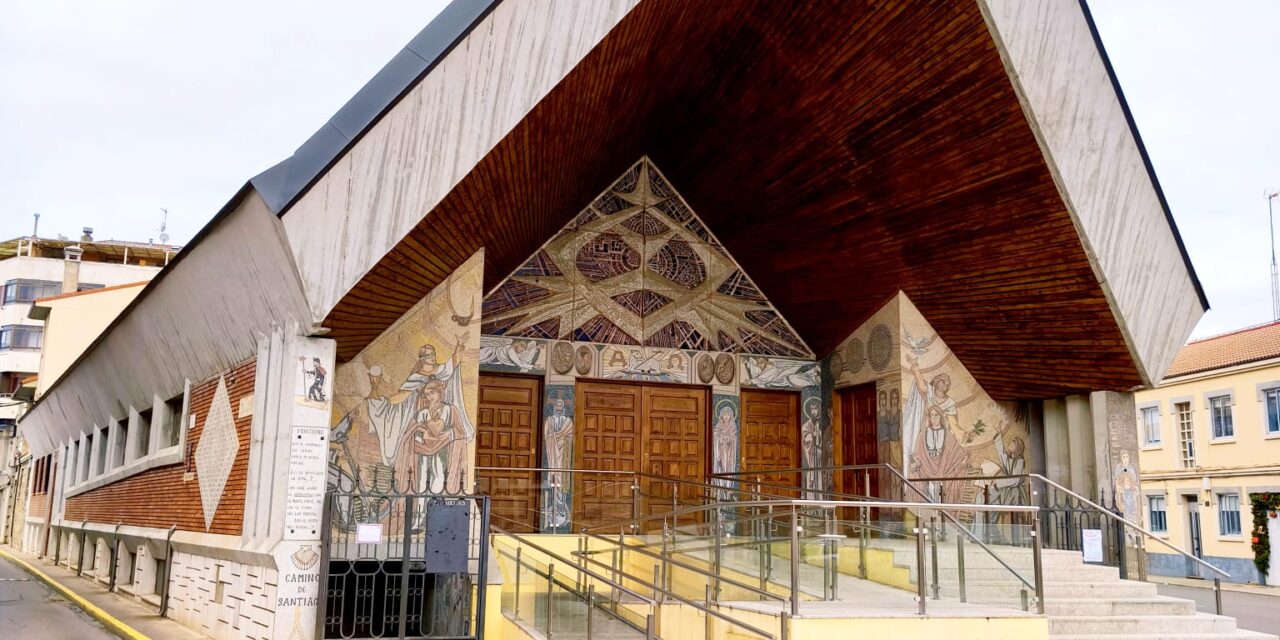
San Pedro de Rectivía Church is the parish church of the Rectivía neighborhood, the district through which the Camino de Santiago route leaves the urban center of Astorga. Initially, it was built as a chapel in medieval times, served by priests from the nearby parish of Santa Marta. In 1920, a new parish was established in this part of the city, and since then, both the residents of Rectivía and pilgrims heading to Santiago attend its religious services.
The church underwent numerous modifications over time until it was completely renovated in 1972, with the current building designed by architects Ángel Mirones Velar and Ceferino Bada Castañón. In addition to the temple, the parish complex houses various spaces for cultural and pastoral activities. It is one of the most important examples of contemporary architecture in Astorga.
It is the only church in Astorga built after the Second Vatican Council, giving it features different from other churches in the area, as its construction emphasizes functionality.
The overhang above the entrance is a standout feature, along with the façade, parts of the side walls, and the interior pavement, all covered in modern mosaics with religious and Jacobean themes. Another unique element is the stained glass windows representing the 14 Stations of the Cross. The contemporary aesthetics and deep spirituality of these windows provide a unique light to the interior, contrasting with the simplicity of the brick and concrete finishes. Among other religious sculptures is the Christ of Love and Forgiveness, made in 1995 by local woodworker Enrique Morán. This crucified Christ is a central figure in the Stations of the Cross procession held every Holy Tuesday in Astorga.
The church is the headquarters of the Brotherhood of the Entry into Jerusalem, popularly known as “Las Palmas.” In addition to participating in the Via Crucis, its main procession occurs on Palm Sunday, when the Blessing of the Palms takes place in the Plaza Mayor. After Mass in the Cathedral, the departure of the “La Borriquilla” float back to San Pedro de Rectivía is a highlight of Palm Sunday.
Curiosities:
All the mosaics of the Church of San Pedro de Rectivía were made by a mosaic workshop called Musivaria Antiqua, founded in the parish complex. For years, volunteers decorated every corner of the entrance, much of the church floor, and some chapel walls with religious motifs. Musivaria Antiqua was a community workshop where many found more than just a way to spend time. The Camino de Santiago features in many mosaics, which also include inscriptions in Arabic and Hebrew, promoting interfaith dialogue