

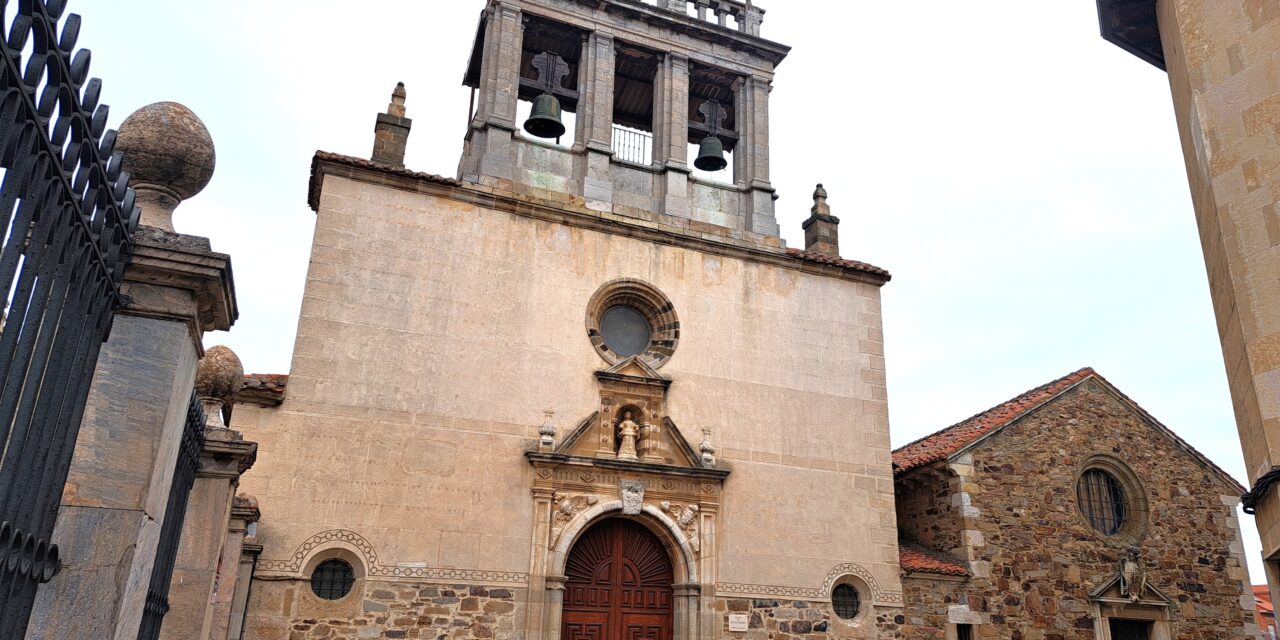
Visitors to Astorga walking the Camino de Santiago through the old town must admire one of its most historic churches: the Church of Saint Marta, patron saint of the city since 1741.
The site has been home to religious buildings since antiquity: beneath the current church stood two earlier ones—first pre‑Romanesque and second Romanesque.
Tradition holds that Saint Marta was a young woman from Astorga martyred in the 3rd century for refusing to renounce her Christian faith. She was sister to Saint Vidal and aunt to children Justo and Pastor, hence she is often depicted educating her nephews.
The first church dedicated to her was built on the site believed to be her home. The present church, in Baroque style, dates from the 18th century. Initiated by Canon Bartolomé de Loredo, construction began in 1738 and finished in 1741.
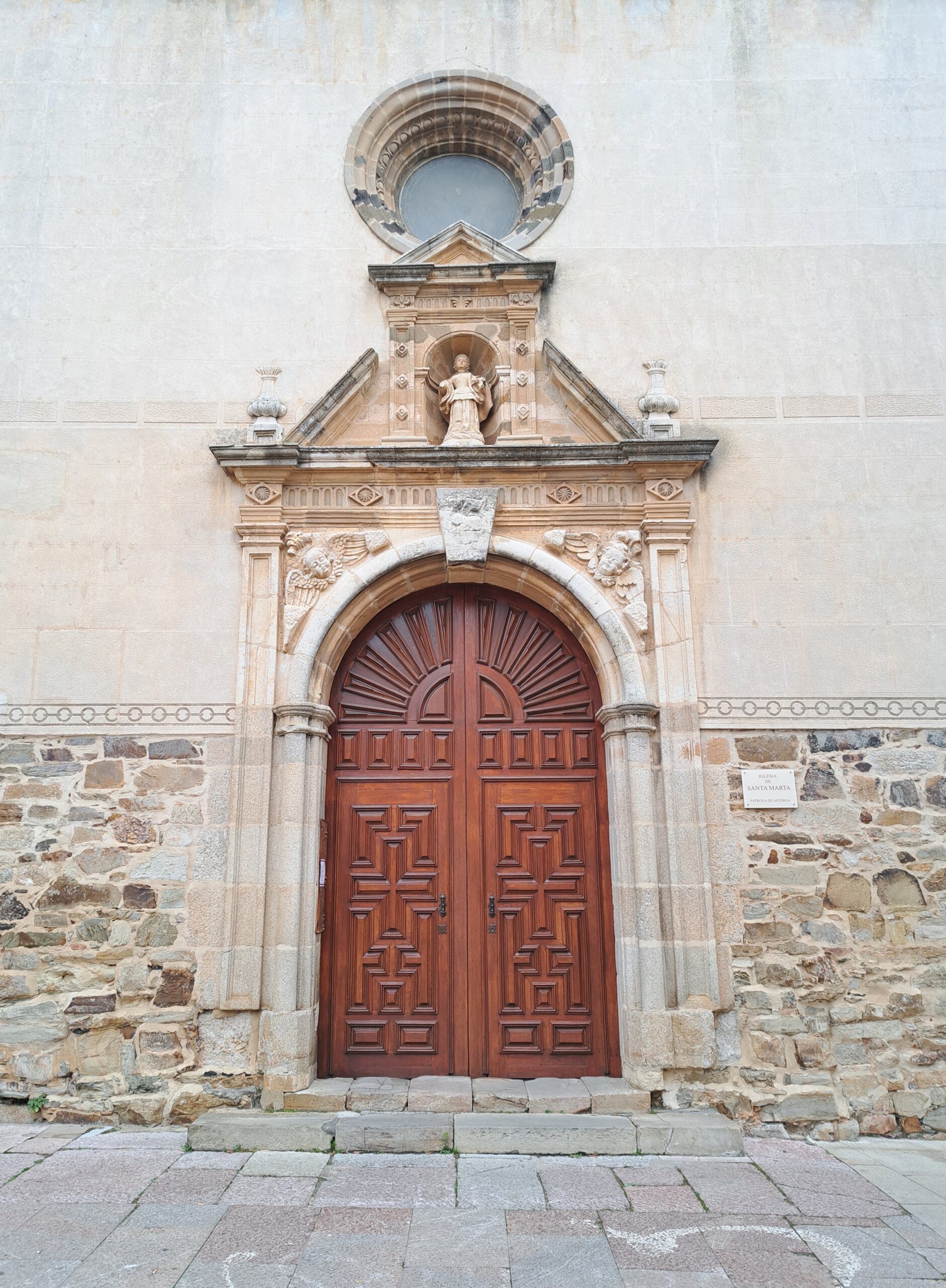
The church has three naves separated by arches, a barrel vault, and a dome over the crossing. The main entrance features a semicircular arch decorated with cherub heads in the spandrels. Above it is a niche with a broken pediment containing a statue of Saint Marta holding a palm and Gospel. A granite bell gable was added later.
A secondary door displays the Cathedral Chapter’s coat of arms and the Paschal Lamb.
Interior highlights include 18th‑century plasterwork; the dome features fantastic beasts, angels, vegetal motifs, the Chapter’s coat of arms, and images of Saint Vidal, Saint Adrian (an Astorga hermit), and Saint Feliz.
The high altarpiece of the main chapel is a masterpiece by Lorenzo de Villagrá and Andrés Domínguez Fierro. It centers on a 17th‑century round‑headed statue of Saint Marta by Lucas Gutiérrez.
Originally, the church had a two‑storey bell gable with semicircular arches, replaced in 1896 by the current granite version.
Bishop Ordoño is buried here; he brought Saint Isidoro’s remains from Seville to León.
Saint Marta’s feast day is February 23, now celebrated in late August for better weather.
Curiosities
The church’s proximity to the Cathedral is unusual. It stands on the site of Saint Marta’s house and presumed burial place.
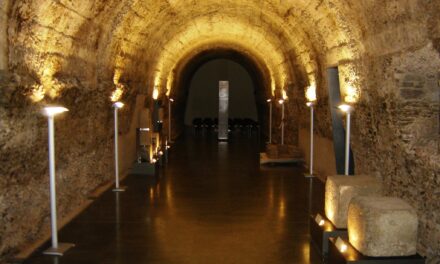
In 1999, an early medieval church was unearthed in the church’s presbytery near the cathedral and Episcopal Palace. It had a rectangular nave, square apse, and dates to the 6th century. It featured separate clerical and lay zones and a small baptismal pool. The building burned down, was never rebuilt, and was later used as a cemetery. Its outline is now marked in the pavement.